As the BEMM129 course comes to an end, it is time for me to reflect on the past 11 weeks. Beyond new knowledge about business models, the uniqueness of this collaborative and online module equipped me with stronger soft skills and an in-depth understanding of certain issues, that will prove absolutely useful in my future career.
Even if I was already familiar with blogging before the module, I did not know how to do it myself. It was therefore particularly enriching to learn how to use WordPress, and to think of different ways to display information, through images or videos for instance. As I became more comfortable with the tool, I started to really enjoy the process. It was particularly rewarding and challenging to read my classmates’ thoughts about my work. These digital skills will definitely be valuable in my future marketing career, as content production gains in importance. Moving further, I then want to explore WordPress even more, by learning HTML coding for example, in order to design a whole blog from scratch.
By working on the MOOC and by reading my classmates’ blogs, I realized that all positions, from fitness trainer to real estate agent, were tremendously impacted by digitalization, and hence required constant adaptation and learning. The way I envisioned my career consequently changed and I now wish to become more agile, flexible and adaptable, by regularly signing up to MOOCs for example, to keep gaining new knowledge.
Module content and discussions made me aware of the importance of online interactions and networking in career development. I therefore tried to overcome my shyness and to share more with my classmates. In the future, I will try to be even more proactive and to further develop my online social skills, to build a stronger professional network.
New technologies and ethics: how to make digitalization fairer and more inclusive
The various topics covered in the module shed light on potentially unethical digital practices and on growing inequalities that may result from digitalization. As a citizen, it made me more aware of the potential “dark-side” of new technologies and of how important it is to help everyone gain digital skills and adopt a learning mindset. As a future marketer, I now perceive more clearly how critical it is to manage consumers’ data ethically. Moving further, I will thus remember that technology alone is not necessarily the answer, and that we, as humans, have the power to shape it to improve our lives.
A couple of years ago, I had never heard of electronic scooters (e-scooters) or of Lime. But in June 2018, Lime launched its e-scooters in Paris, and passed 1 million rides in the city in just a few months (Lime, 2018). My friends and I were all enjoying this new, convenient, agreeable and fun way to travel small distances. In this blog post, I then wanted to look at Lime’s business model in greater detail, to evaluate how it succeeded in cracking the market in just a few months, and in transforming the way urban citizens experience micromobility.
Lime is a US based company, founded in San Francisco in 2017. The company first started with a e-bike service, before launching e-scooters to complete its product portfolio (Lelièvre, 2019). From the very start, Lime detected urban dwellers’ need for a cheap, convenient and flexible way to travel short distances quickly in highly congested cities (Boston Consulting Group, 2019).
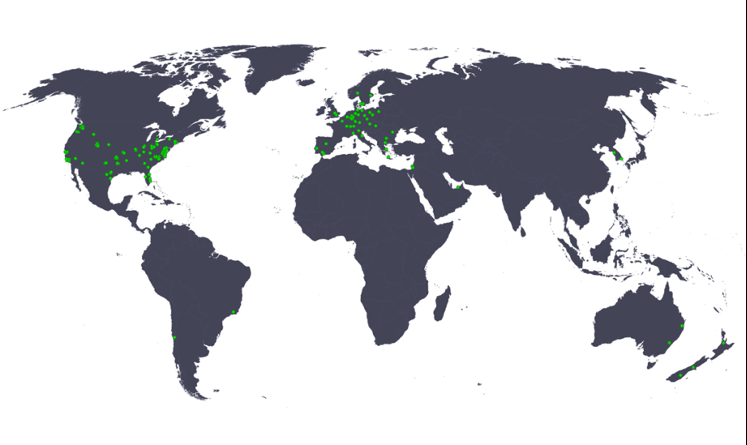
Lime’s success soon followed, and, in September 2019, the company exceeded 100 million rides (Somerville, 2019). It is now the world leader of the e-scooters market with a market valuation of over $2 billion and investors such as Uber or Alphabet – Google’s parent company (Future Engine, 2018; Lelièvre, 2019; BCG, 2019). Lime’s e-scooters can be found in more that 100 cities worldwide including London and Milton Keynes in the UK (Lime, 2020e). Its main competitor, Bird, has also registered major growth rates (Future Engine, 2018).
Simply unlock and ride – a convenient offer allowed by new technologies
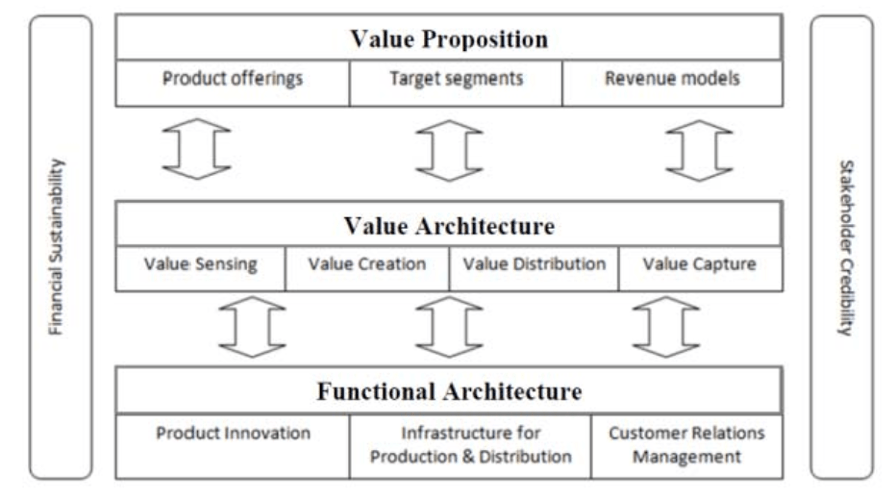
If Lime’s appeal can be explained by the ease of use and convenience of its offer, it would not have been successful without integrating technological innovations in its business model. Lime relies on an on-demand business model: users can access vehicles whenever they need, for a short-term rental, thanks to a digital platform (FourWeekMba, 2020). Li’s business model framework (2018), allows to observe in greater detail the pervasiveness of digital technologies within Lime’s entire business model (Figure 3).
Figure 3: A business model framework to analyse Lime. Adapted from « The digital transformation of business models in the creative industries: A holistic framework and emerging trends », by F. Li, 2018, Technovation, 102012. doi: https://doi.org/10.1016/j.technovation.2017.12.004
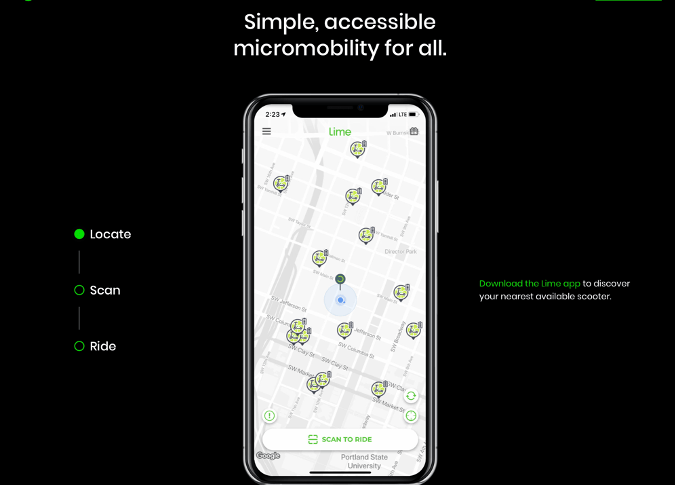
First, Lime’s value proposition and more specifically its product offering and revenue model are heavily reliant on digital. Indeed, once the user has downloaded Lime’s app, he or she can just geolocate the closer e-scooter thanks to an interactive map. Then, the e-scooter can be unlocked simply by scanning a QR code, and the user can start riding. When the ride is over, the scooter can be parked wherever it is authorized and can be locked again using the app. Payment is also made on the app: a fixed rate is charged to unlock the vehicle and a fee per minute is applied depending on the city, time of day and day of the week (Lime, 2020a).
The value architecture is then transformed as well by new mobile and payment technologies, allowing the company to implement a dynamic pricing strategy (SmartInsights, 2014). Finally, Lime’s functional architecture is also based on mobile technologies. More specifically, the company employs “juicers” to recharge the e-scooters, ensuring service continuity. Juicers are part-time workers, paid depending on the number of scooters they charge (Lime, 2020a). Lime is therefore also part of the growing gig economy, offering jobs to independent contractors (Petriglieri et al., 2018).
Will the success last?
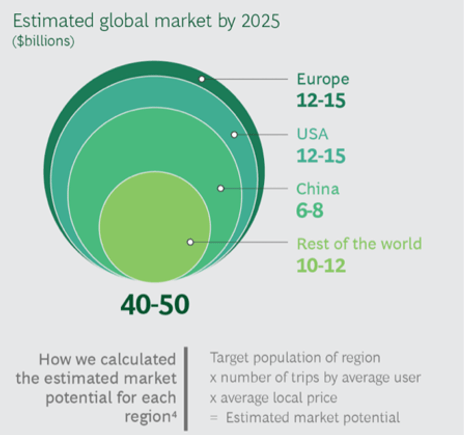
Despite its impressive growth, one can wonder whether the company is here to stay. Indeed, recent difficulties have questioned the financial sustainability of Lime’s business model (Li, 2018). Indeed, even if it theoretically takes four months for a e-scooter company to break-even, scooters are sometimes stolen or vandalized, and can be damaged by weather conditions (BCG, 2019; McKinsey & Company, 2019). This has generated important costs for Lime, threatening its profitability. Rates of adoption have also been slower than predicted in some markets, forcing Lime to announce withdrawal from 12 cities at the beginning of the year (Lime, 2020d) In addition, the proliferation of scooters in some cities, and the security risks associated, have led many cities to try to regulate and to limit e-scooters usage (BCG, 2019). With an ever increasing global e-scooter market, which is forecasted to reach $40 to $50 billion worldwide in 2025, new entrants are appearing, making the competition even fiercer (BCG, 2019). As a result, Lime’s market position may be challenged and the company may have to differentiate its offer and to refine its current business model to stay competitive.
Lime could thus rely on further technological developments to offer more resistant and performant scooters, with longer lasting batteries in order to be more profitable (BCG, 2019). Second, a sidewalk riding detection tool is currently beta-tested in San Jose, California, and could be more widely implemented, in an effort to tackle urban securities issues (Lime, 2020b). Finally, Lime is now partnering with Uber, taking advantage of digital tools to access new value creation channels (Lime, 2020c).
Lime’s e-scooters are therefore an example of how digital can make a company successful by providing consumers with an innovative value proposition. It however also illustrates that these new business models may experience difficulties to be financially sustainable. As many digital companies, Lime then may have to keep adapting and to keep seizing digital opportunities and innovations, to remain the market leader.
Li, F. (2018). The digital transformation of business models in the creative industries: A holistic framework and emerging trends. Technovation, 102012. doi: https://doi.org/10.1016/j.technovation.2017.12.004
Today, I’d like to share with you some insights on how marketing as a role has changed as a result of the digital revolution and on how the function is likely to evolve in a near future. Particularly, I wish to reflect on the impact these transformations can have on the skills needed to be a successful marketer.
Digital marketing: a new necessity for businesses?
As consumers, many of us now have embraced new technologies. We spend a lot of time online, researching, buying, sharing or interacting. On average, a consumer uses five different electronic devices a day (Cvitanovic, 2018). Digitalization has led to ever-increasing instantaneity and to a so called content shock: consumers are constantly bombarded with information and content to process (Allen, 2017).
To get customers’ attention in that noisy environment, marketers had to adapt by redefining their strategy and by adapting their skills and activities (Digital Marketing Institute, 2020a). As a result, digital marketing has developed. It designates all types of digital media, data or technology employed and integrated with traditional communication tools to attain marketing objectives (Chaffey & Ellis-Chadwick, 2019). Digitalization has therefore created new possibilities and new tools for marketers, that they have to understand and use if needed (Chaffey & Ellis-Chadwick, 2019). They need for instance to manage big data, to create rich and engaging content or to optimize their search engine results (Digital Marketing Institute, 2020a). The notion of marketing technology has even been introduced to describe all the new technologies used by marketers in their daily job in the 21st century, such as data management platforms or monitoring tools (Patrutiu Baltes, 2017).
The daily job of a marketer is then totally different from what it was 10 or 20 years ago, especially if his or her company has decided to digitalize. In a fast-paced digital environment, marketers need to be agile and to take advantage of new technological tools quickly (Cvitanovic, 2018; Digital Marketing Institute, 2020a). Companies are indeed looking increasingly for talents with an up-to-date digital knowledge and who are able to analyze data to gain deep customer insights (Chaffey & Ellis-Chadwick, 2019).
Some even argue that embracing digital marketing is what will make company success in tomorrow marketplace (Chaffey & Ellis-Chadwick, 2019). It then probably implies that all marketers will need to gain at least basic digital knowledge.
Growth hacking: developing a new mindset?
Have you ever heard of growth hacking? This term originates from Silicon Valley’s tech companies and focuses on marketing as a way to help the business grow quickly and significantly, by testing and improving techniques to reach, interact with and engage customers (Chaffey & Ellis-Chadwick, 2019). It requires a complete change of mindset compared to traditional marketing as it involves to test and to learn by doing.
« Growth hackers are a hybrid of marketer and coder »
Chen, 2012
Even if these techniques are still quite recent and mainly employed by tech companies, they are receiving more and more attention (try to search growth hacking on Google!). Andrew Chen (2012) even argues that growth hacking is the future of marketing. He thinks that the lines between marketing and engineering are blurring, meaning that marketers now need to possess coding and technical abilities to be successful. He also believes that growth hacking requires a complete disruption of the traditional marketing function. Whereas Chen’s predictions may seem a bit extreme (will all marketers really become coders?), I believe that they at least encourage traditional marketers to question their current mindset and skills.
So … What’s next?
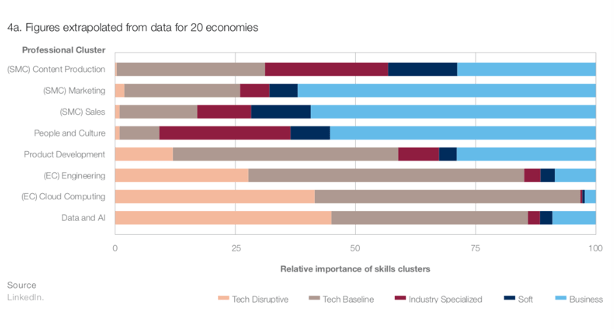
According to the World Economic Forum (2020), 17% of opportunities in emerging professions between 2020 and 2022 will be in marketing, sales and content and will include positions like social media assistant or digital specialist. These jobs will require basic computer literacy as well as specific knowledge depending on the industry, such as online marketing or web design (World Economic Forum, 2020). Many of them will also require an elementary understanding of more advanced technologies such as Artificial Intelligence (Blue, 2020).
Figure 2: Types of skills needed in emerging professions clusters. Retrieved from « Jobs of Tomorrow: Mapping Opportunity in the New Economy » by the World Economic Forum, 2020, http://www3.weforum.org/docs/WEF_Jobs_of_Tomorrow_2020.pdf
A urgent need to up-skill?
Marketing has therefore been tremendously impacted by the digital revolution. If previsions hold true, marketers will have to remain agile and to upskill regularly to be successful in the future. I even think that the need for upskilling is quite urgent, as many companies today face a digital skill gap (Digital Marketing Institute, 2020b).
Marketing is then a good illustration of our need to become life-long learners and to keep developing new skills through our career, to keep pace with technological developments (Government Office for Science, 2017). To conclude this post, I’d like to share with you this Ted Talk by Carol Dweck (2014), who explains the importance of developing a growth mindset as opposed to a fixed mindset. I find this particularly relevant and insightful to prepare for the challenge that is to be a life-long learner!
Cvitanovic, P. (2018). Navigating New Marketing Technologies, Channels and Metrics. Managing Global Transitions: International Research Journal, 16(4), 379-400.
Patrutiu Baltes, L. (2017). Marketing technology (Martech) – the most important dimension of online marketing. Bulletin of the Transilvania University of Brasov, 10(59), 43-48.
Hi everyone and welcome to this blog dedicated to digital business!
My name is Nolwenn, I am a 22 years old MSc Marketing student at the University of Exeter. I am also a French Erasmus student, my other school being Grenoble Ecole de Management.
In the coming weeks, I’ll be writing about digital business models as part of my degree at the University of Exeter. From a business and marketing perspective, I am interested in understanding how digital developments are disrupting the business landscape and are creating new challenges for companies and the society as a whole. As a future practitioner, I also wish to further learn about the impact digital developments have on the workplace and to develop practical skills to improve my employability.
That’s all for this short introduction, I hope you’ll find my articles interesting and insightful! If so, please leave a comment below 🙂






 The Digital Corner